- +1 (855) 956-3494
- / 9AM - 5PM EST / Monday-Friday
Technical support hours: 8AM – 8PM EDT, Monday – Friday
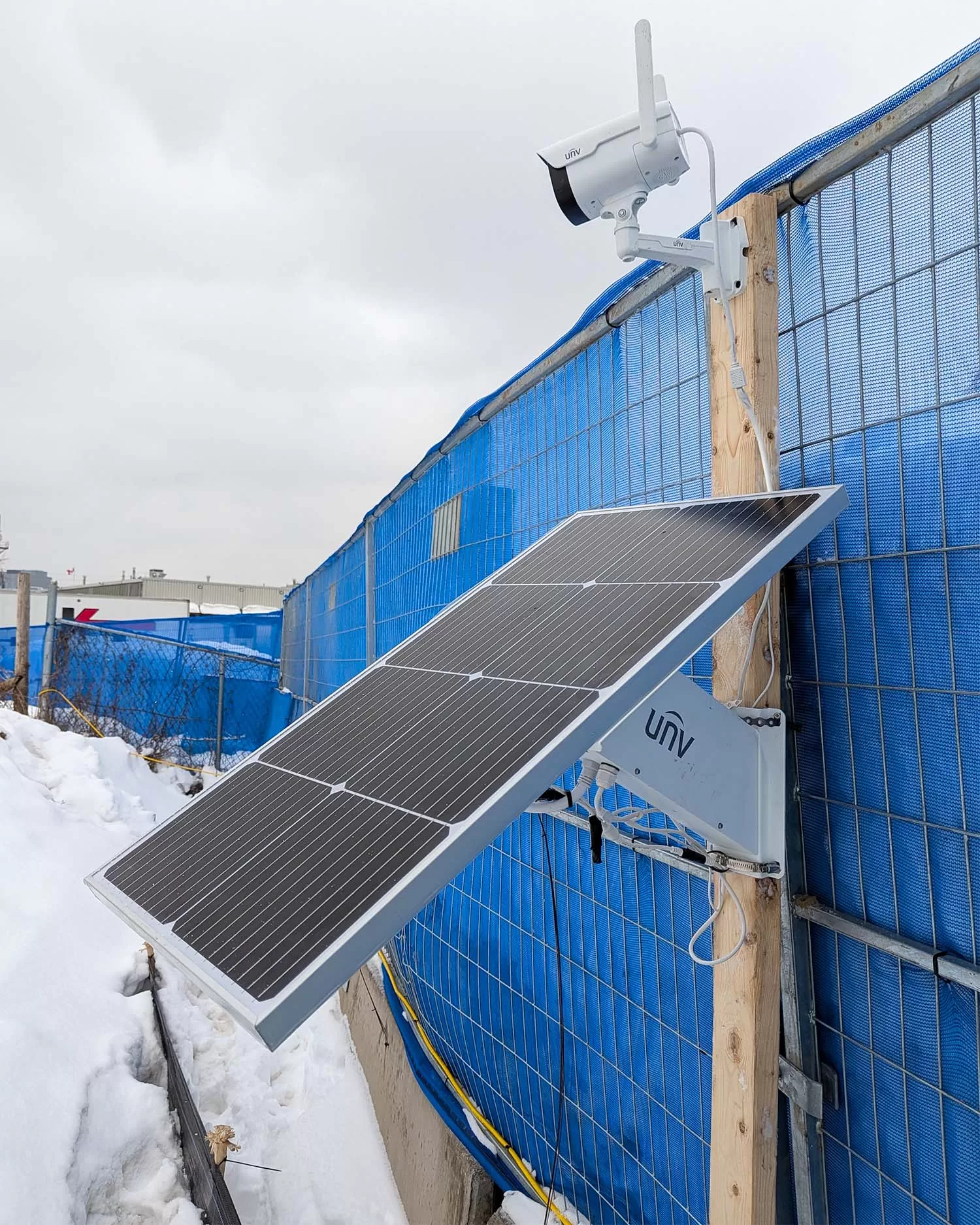
If you've driven past a construction site lately, you may have noticed a camera on a pole with a small solar panel beside it, and no conduit or trenching in sight. That's the new normal for temporary sites, where running power and internet for a camera can cost more than the camera.
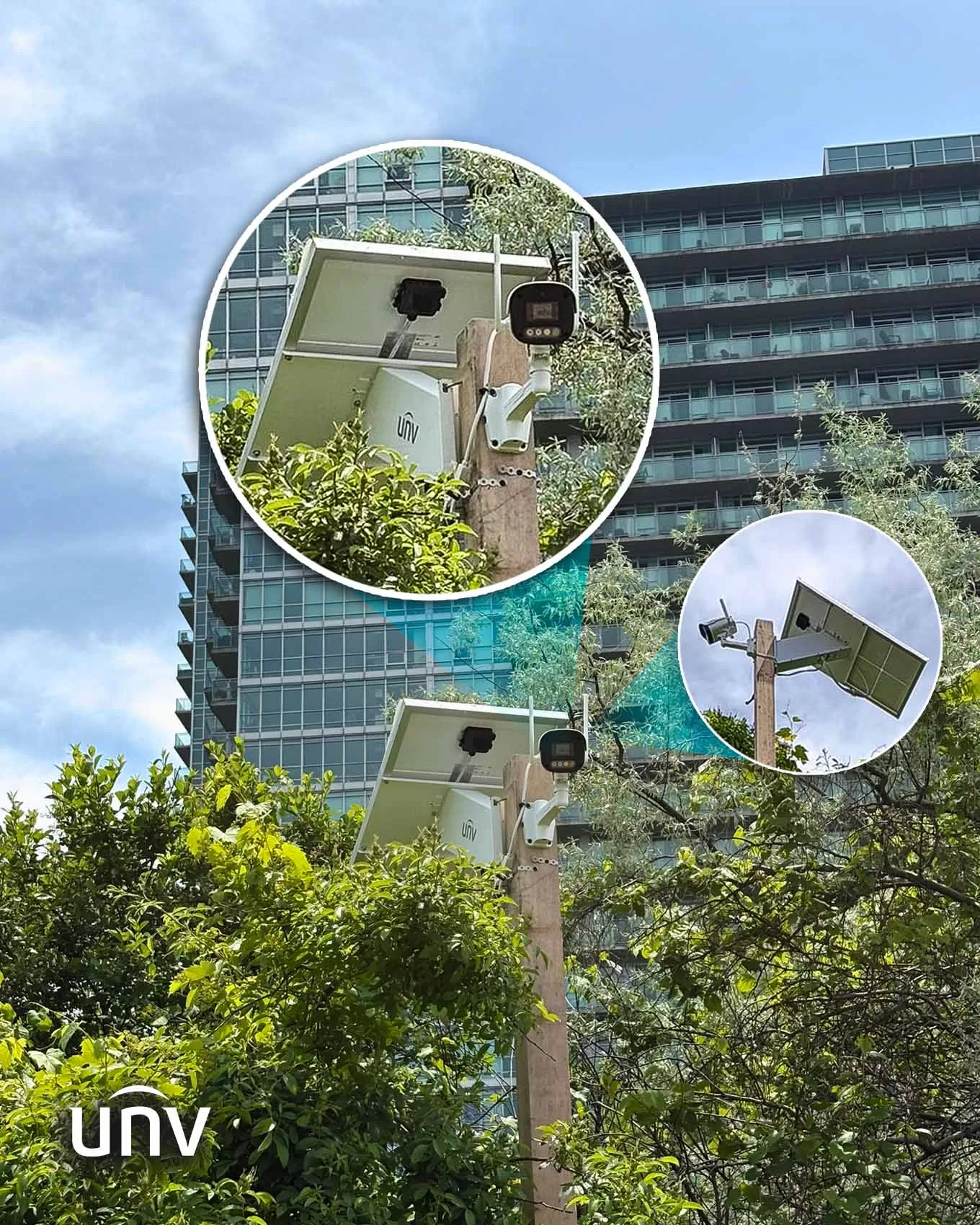
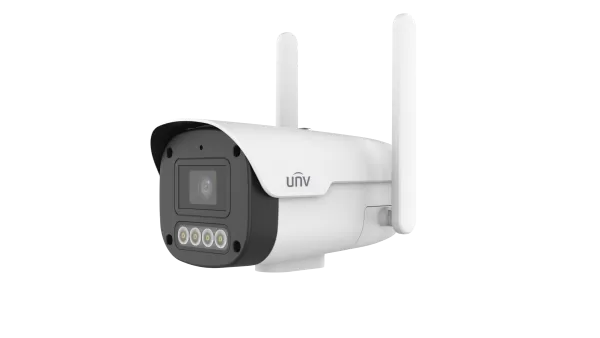
The camera is the Uniview IPC2A14LP-ADF40KC-4G-US, a 4MP bullet with a built-in 4G LTE connection (Nano-SIM). It records to a microSD card up to 512GB and covers up to 50 m in the dark with IR. It also has a white light for deterrence, two-way audio, and human/vehicle classification to cut false alarms. It's IP67-rated and works from -30°C to 60°C, which matters in a Canadian winter.
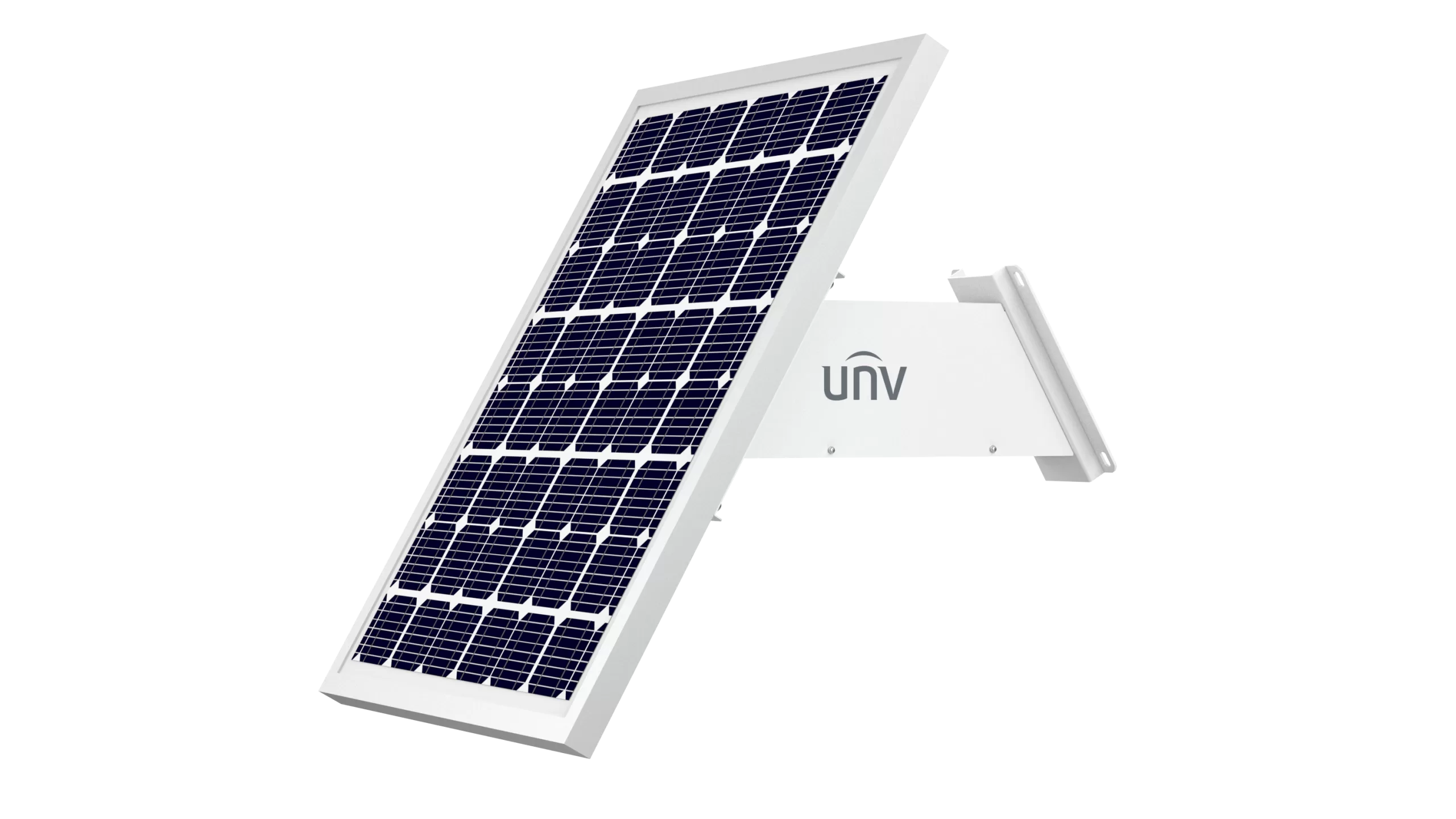
Power comes from the SLR-B320P60: a 320Wh lithium battery paired with a 60W solar panel, with a built-in heater to protect the battery in the cold. It mounts on poles from 67 to 110 mm and can overlay battery percentage on the live video. Uniview designed it for sites with no power and no network.
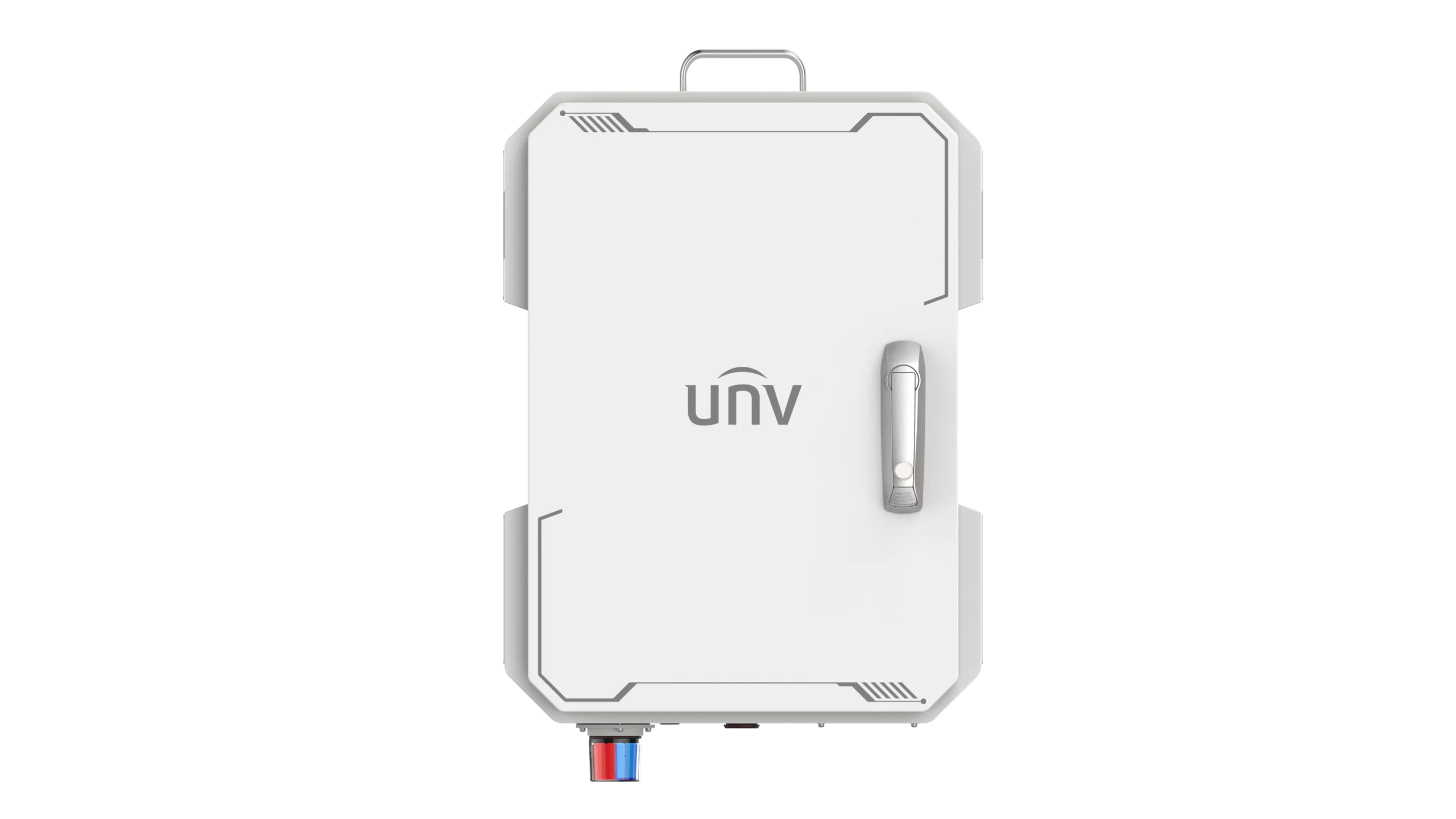
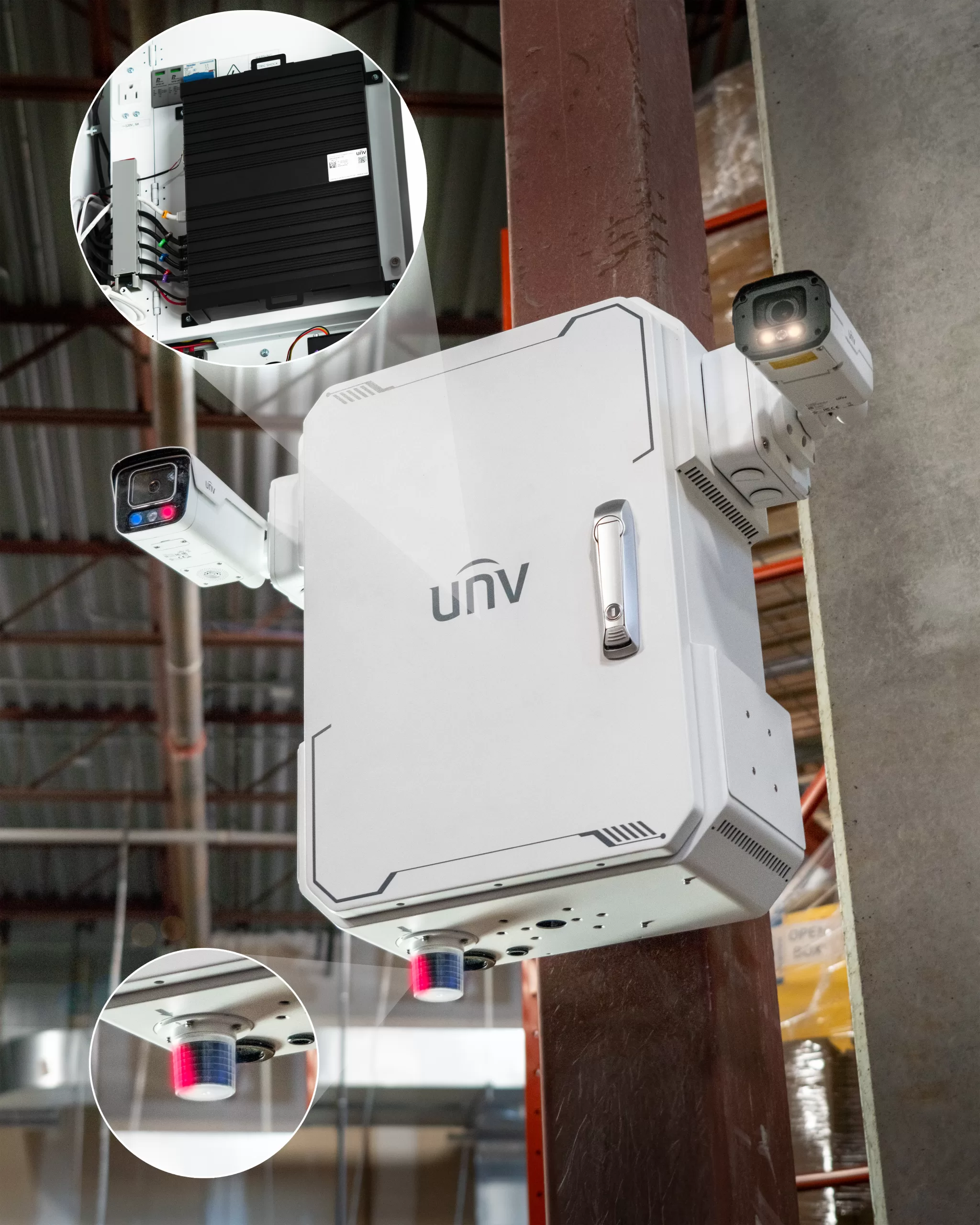
For sites that need more than one camera, the Smart Management Box (SMBOX01-R-US) is the next step. It's a weatherproof cabinet (IP56) with an 8-port PoE switch, a built-in NVR with up to 16TB of storage, and a slot for a 4G router. It reports its own status and that of its cameras to a mobile app and EZCloud. If a device drops off the network, it power-cycles it automatically, so nobody has to drive out to reboot a camera.
With temporary sites like these, a service subscription model here can over time earn much more than a standard one and done install. After all, the site is temporary and the cameras will need to be moved to new locations once the construction is finished. Here's how an integrator could do it:
Construction sites have already figured out that off-grid cameras work. The open question is whether the integrator selling them is collecting once or every month.

Scan To